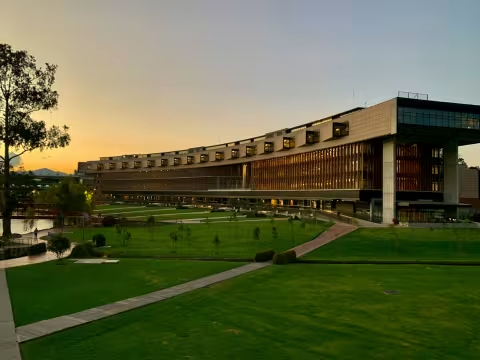
Introduces environmental science as a systems discipline. Covers energy flow and nutrient cycling, population and community dynamics, biodiversity and its measurement, pollution and toxicology, resource use, and the frameworks used to assess environmental impact.
Coastal and estuarine systems supply the examples throughout, both because that is where the institutional expertise sits and because an estuary presents nearly every problem the discipline studies within a short drive.
The course establishes quantitative habits early. Students are expected to work with units, orders of magnitude and simple mass balances from the first weeks, and assessment includes calculation rather than description alone.