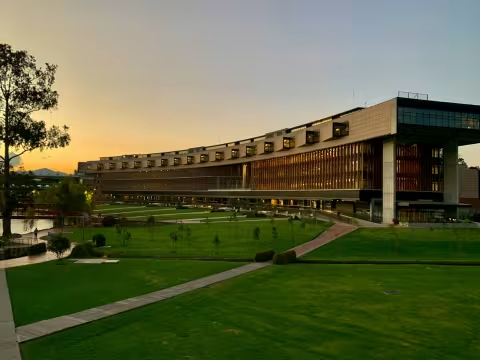
Prentice sits on a mixed-substrate shore at the mouth of the Aldwych River, where a sheltered inlet and an exposed headland are twenty minutes' walk apart. That contrast is the reason the station is where it is. A student can sample two very different intertidal communities in a single tide and compare them against a record that goes back to 2004.
What is here
Two wet laboratories with running seawater, a dry laboratory with microscopy and imaging, a small boat shed with three skiffs and a rigid inflatable, and a seawater table system used for holding animals for short-term observation. The dive locker supports scientific diving for certified students and staff.
Year-round housing opened in 2026: sixteen beds in two buildings, replacing the summer-only cabins that limited winter work to day trips. Winter is when the most interesting things happen on this shore, so the change matters more than the bed count suggests.
The long record
The intertidal transect survey has run without a gap since 2004. Four permanent transects are walked every month, and the data are held by the Department of Life Sciences. It is cold, wet work and consistently the most popular thing the ecology group does.
Getting here and visiting
The station is thirty-one miles north of campus by road, about forty minutes outside the summer season. There is no public access to the laboratories, but the shore itself is public land and the interpretive boardwalk above the inlet is open year-round.
Course groups book through the station manager, Tom Whitfield. Research use outside teaching terms is arranged directly with the department.
Hours. Staffed weekdays, 8 a.m. to 5 p.m., and whenever a course group is resident. Field work runs to the tide, not the clock.